

The importance of viscosity in the manufacturing and use of adhesives

In this article, we explore the various stages of adhesive manufacturing and the importance of viscosity control. Adhesive production is a demanding process that requires strict control over several parameters, including viscosity. This key factor influences each manufacturing stage, from raw material preparation to final product, ensuring product quality and process efficiency.
The adhesive manufacturing process
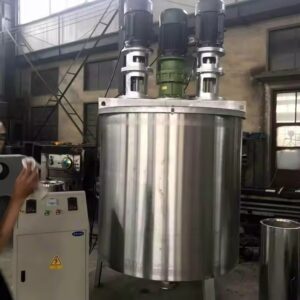
Mixing ingredients
Production begins by blending the primary components, such as polymers, solvents, and additives. Viscosity evolves during the mixing stage to reach the desired target value.
Reaction and heating
Many adhesives undergo physical and chemical reactions, including polymerization, to reach their final properties. During adhesive manufacturing, viscosity progressively increases to reach the desired consistency. Real-time viscosity monitoring guarantees that the adhesive meets specifications.
Quality control and storage
Before packaging, adhesives must be tested for compliance. Precise viscosity control warrants conformity to technical requirements and compatibility with application methods, whether for spraying, rollers, or brushes.
Traditionally, adhesive manufacturers measure viscosity at the end of production using a laboratory viscometer. The increase of automation and its benefits ledadhesive manufacturers to adopt process viscometers, reducing production time and providingcontinuous batch information.
Viscosity: a key to adhesive quality
Viscosity impacts application ease. Lower adhesive viscosity allows for easier flow in application systems, while higher viscosity improves adhesion.
Application
The application of the adhesive is a crucial stage. Indeed, adhesives must have the right viscosity to ensure product consistency and efficiency. In industrial processes such as cardboard manufacturing, viscosity directly affects the adhesive’s ability to uniformly cover surfaces without defects or residue.

The MIVI viscometer from Sofraser: ideal for adhesive production monitoring
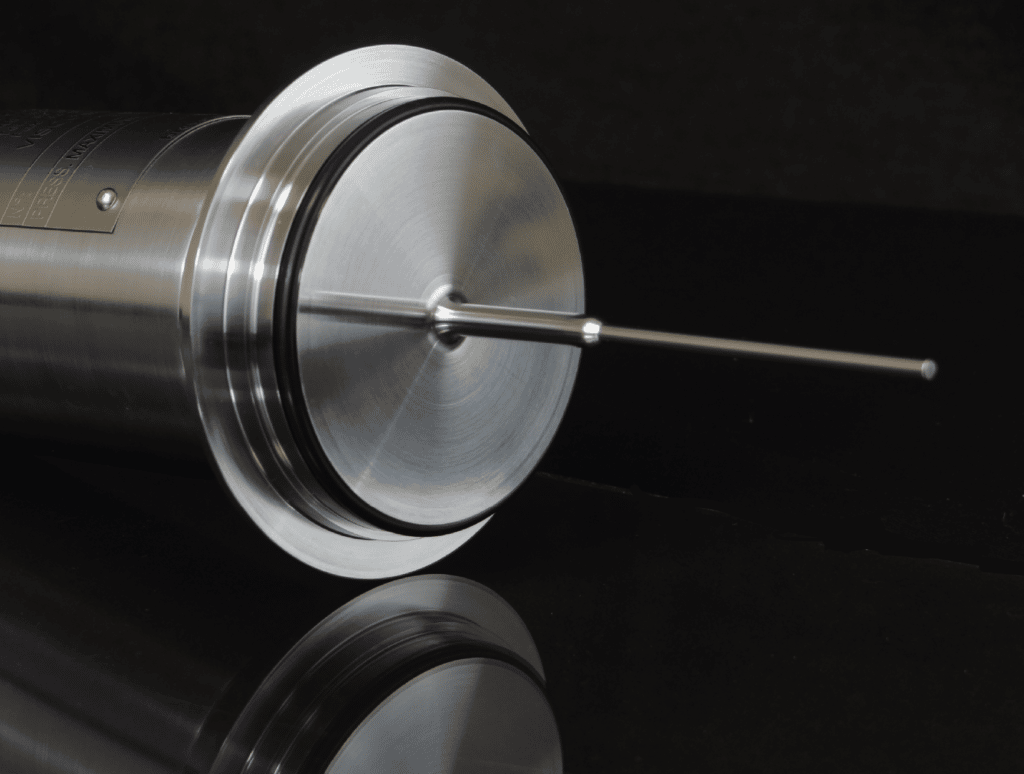
The Sofraser MIVI is the ideal instrument for inline continuous viscosity monitoring within production processes.
Compatible with a wide range of viscosities, the MIVI is able to measure both thick pastes and thin adhesives. As the MIVI requires no additional engineering, it can be directly installed on your production lines. Its ease of use and configuration allow operators to quickly and efficiently integrate it into operations.
The vibrating rod technology provides the Sofraser viscometers with a unique self-cleaning feature, enabling nearly maintenance-free continuous operation. The sensor provides continuous, real-time measurements 24/7 for years.
Sofraser’s contribution to viscosity control
MIVI sensors offer unmatched precision for viscosity control at every stage of adhesive production. Sofraser instruments, whether installed in mixing tanks, circulation loops, or directly on pipelines, allow you to :
- Optimize production: reduce variations and improve consistency between batches.
- Reduce costs: minimize waste and downtime due to non-compliant batches.
- Prevent viscosity overshoot: reduce the risk of damage to production equipment.
- Ensure quality: meet industrial standards and customer requirements.
Related viscosity applications
Our resonance frequency viscometers are perfect for adhesive applications in generalas well as for other types of adhesives, such as:
- Starch-based adhesives
- Hot glues
- Adhesive tapes
- Hot-melt adhesives
- Vinyl glue (white glue)
- Acrylic adhesives
- Polyurethane adhesives
- Aliphatic adhesives