The Viscosity of Bitumen in the Manufacture of Waterproofing Membranes for Roofs and Terraces

Bitumen: a key component in the manufacture of waterproofing Membranes
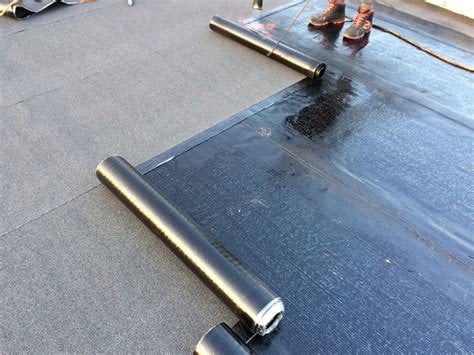
Roofing contractors receive bitumen waterproofing membranes in rolls and require a flawless product. The viscosity of bitumen during the manufacturing of these rolls is crucial to ensure a consistently homogeneous product that allows for easy and efficient installation.
Importance of viscosity in the manufacturing process
In the bitumen manufacturing process for roofing, viscosity is an essential parameter as it directly affects mixing, application, and curing stages.
If the bitumen is too viscous, it may cause difficulties in controlling its flow during mixing, leading to uneven distribution of additives.
Bitumen must have an optimal viscosity to ensure effective mixing with other components, such as polymers or additives, which enhance its characteristics and allow the layers to form defect-free waterproof membranes.
Excessive viscosity leads to poor flow and uneven matrix impregnation, while low viscosity may cause insufficient impregnation or overflow.
Modified bitumen is combined with other membrane components, and its viscosity can affect the product’s quality and uniformity, potentially compromising its durability and waterproofing effectiveness.
Moreover, viscosity influences bitumen behavior during heating and cooling phases. Overly fluid bitumen may cool too quickly, resulting in an irregular texture or insufficient bonding in multi-layer applications.
By carefully controlling viscosity, waterproofing membrane manufacturers ensure that bitumen is efficiently prepared and utilized, delivering a high-quality and reliable product that meets the stringent requirements of roofing materials.
Advantages of a viscometer in bitumen applications
The use of a viscometer allows for continuous and precise control of bitumen viscosity during production. This is particularly important to ensure that bitumen maintains a constant viscosity, guaranteeing its efficiency in application and final use. Sofraser’s range of viscometers offers two ideal products for bitumen applications: the MIVI Viscometer and the Thermoset LT Analyzer.
The MIVI Viscometer
The MIVI viscometer, with its vibrating rod, provides precise, instantaneous, and continuous viscosity measurements at process temperature. Thanks to its design, the active part of the viscometer is resistant to fouling, making it well-suited for bitumen applications. Its compact and versatile design allows for easy integration into existing pipelines or equipment, making it particularly useful in roofing waterproofing roll production facilities. With no moving parts, the viscometer requires minimal maintenance.

Thermoset LT Reference Temperature Viscometer
The Thermoset LT is the most economical option for measuring viscosity at a reference temperature. This technology eliminates the influence of process temperature on fluid viscosity. The Thermoset LT uses MIVI’s robust technology and does not require an oil bath or oven for temperature management. Designed for ease of use, it ensures effective viscosity control during bitumen production for roofing, keeping the product within precise specifications to maximize quality and durability.

Advantages of Sofraser process viscometers for waterproofing Membranes
Sofraser viscometers, whether MIVI or Thermoset, provide reliable viscosity measurements tailored to the demands of roofing bitumen applications. Key advantages include:
- Instantaneous and precise dynamic viscosity measurement for the MIVI, with optional temperature and density measurements.
- Viscosity measurement at reference temperature for the Thermoset.
- For the MIVI, using the 9710 processor allows for the calculation of temperature-compensated viscosity (TCV) to offset the influence of temperature on viscosity.
- For the Thermoset, viscosity measurement is correlated to ASTM D445 standards, ensuring consistency with quality control lab tests.
- High repeatability and no drift over time due to the absence of moving parts and strong fouling resistance.
- Robustness and durability of both solutions, designed to operate 24/7, 365 days a year, with minimal maintenance requirements.