

Epoxy resins: a fundamental viscosity

Epoxy resins play a key role in many industrial applications, from composite manufacturing to specialized adhesives. One of the fundamental characteristics of these resins is their viscosity, which influences their manufacturing, application, and final performance.
Epoxy resin manufacturing process
Epoxy resins are typically produced through a chemical reaction between epichlorohydrin (ECH) and bisphenol-A (BPA). This process involves several critical steps:
- Mixing raw materials (ECH and BPA) in a reactor.
- Adding a caustic soda solution to initiate the reaction.
- Separation and purification of phases through washing and vacuum distillation.
- Adding additives to customize final properties, such as flexibility or curing speed.
These steps require strict viscosity control to ensure product quality and reproducibility.
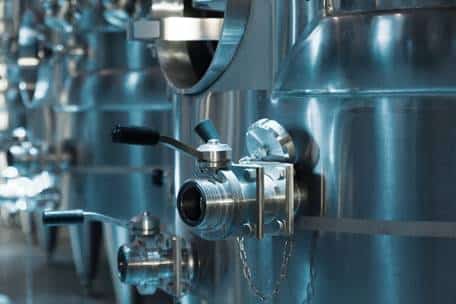
Why is viscosity so important in Expoxy Resins?
Viscosity determines how easily a resin can be handled and applied. Here are the key areas where viscosity plays a decisive role:
Epoxy resin manufacturing
A well-controlled viscosity ensures proper homogeneity when mixing the resin and hardener. If viscosity is too high, mixing becomes difficult, potentially leading to incomplete reactions and defects in the final material. Conversely, too low viscosity can cause component separation or improper additive incorporation.
Application
For vertical applications, higher-viscosity resins are often preferable as they reduce unwanted drips. On the other hand, for applications requiring uniform filling, such as molding, lower viscosity allows better penetration into fine details.

Air Bubble Formation
Thicker resins tend to trap more air bubbles, which can affect both the aesthetic and structural quality of the final product. A more fluid resin facilitates natural degassing.
Influence of Environmental Conditions
Ambient temperature directly affects viscosity. A resin stored at low temperatures becomes thicker, while higher temperatures make it more fluid. This behavior requires precise control to ensure optimal performance, especially in variable production environments.

Sofraser’s Solutions : real-time viscosity monitoring in Expoxy Resins Production
Sofraser’s MIVI process viscometers are specially designed to meet the challenges of industries using epoxy resins. These instruments offer :
- Real-time measurements to monitor viscosity variations during the polymerization process.
- Wide measurement range for low to high viscosity resins.
- High sensitivity for accurate detection of changes for optimal quality control.
- Robust system for demanding industrial environments with 7-year warranty.

Advantages of using the MIVI
A MIVI viscometer is typically installed directly on the reactor for instant and continuous batch viscosity measurement. This optimizes epoxy resin production processes by:
- Continuous batch monitoring in the reactor.
- Detecting the end of the mixing process.
- Avoiding overshoots.
- Reducing production time.
- Improving mix quality.
- Saving on raw materials.
- Preventing process-related accidents.
- Ensuring mixture quality for optimal application.
Viscosity is a critical parameter in epoxy resin processing, influencing both production and application. Sofraser’s MIVI process viscometers provide the necessary tools for precise control, enabling manufacturers to ensure optimal quality while achieving significant cost savings. Investing in our technology means choosing efficiency, safety, and performance.